
· by Michael Blair, Nashville's Flooring
A dishwasher line lets go, a water heater drains into the hall, or a spring storm finds a gap under a door, and one room’s floor takes the water. The first question most people ask is whether the floor is ruined. Usually nobody can tell that day. What decides it is how fast the room is dried, what the water did to the subfloor, and what the moisture readings say once things settle. Below is what we tell homeowners to do right away, how the National Wood Flooring Association says a wet wood floor is assessed, and where vinyl plank, laminate and carpet are different. Our work on what comes after, from subfloor repair to new boards, starts from those readings.
What should you do in the first two days after water reaches a floor?
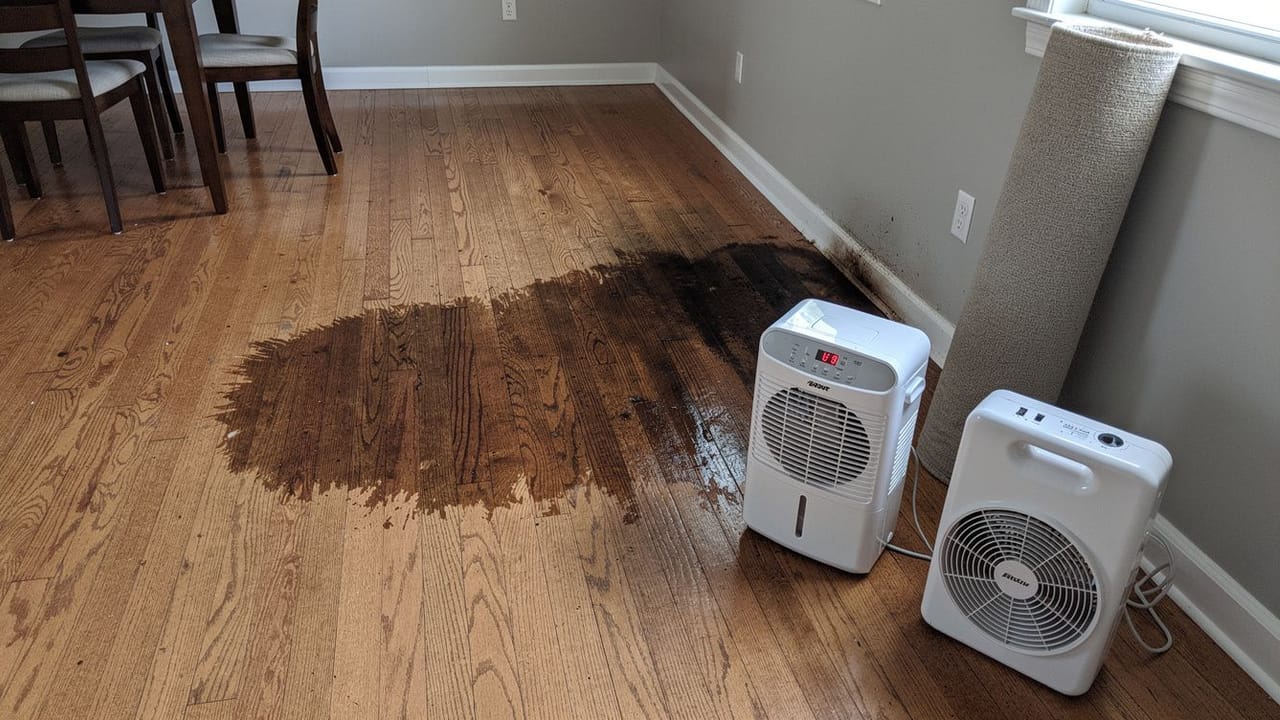
Stop the source, get everything off the wet floor and start drying immediately. The EPA’s brief guide to mold, moisture and your home says water-damaged areas and items should be dried within 24 to 48 hours to prevent mold growth, and it recommends keeping indoor humidity below 60 percent, ideally between 30 and 50. In a Middle Tennessee summer the air alone will not get a room there, so run the air conditioning, add a dehumidifier and point fans across the wet area. Roll up area rugs and take them out of the room, and lift furniture off the boards so nothing traps water against the finish.
Two things change the plan. If the water came from a sewer backup or was otherwise contaminated, the EPA’s mold cleanup guidance says to call in a professional with experience cleaning and fixing buildings damaged by contaminated water rather than handling it yourself. And if the house sits on a crawl space, water that went through the floor may be sitting on the subfloor and joists where you cannot see it, so the space underneath needs a look even when the room above seems to be drying well.
What not to do yet is sand, refinish or tear out. A wet floor changes shape as it dries, and a board that looks lost on the second day can look very different a few weeks later.
Can a soaked hardwood floor be dried and kept?
Often, yes, unless the boards have buckled. Writing for the NWFA in Hardwood Floors magazine, Brett Miller’s guide to assessing and addressing water damage says minor damage will dissipate or even completely disappear as the flooring dries. The same article is just as plain about the other end: a buckled wood floor, one that has lifted off the subfloor, has to be replaced wherever the buckling occurred. An earlier NWFA piece in the same magazine, Addressing Water-Damaged Floors, explains why: once a floor buckles, its fasteners and adhesives have lost their hold and it will not go back down, so the boards come up after the moisture source is gone.
Drying a wood floor uses the same tools in every case: moving air, heat and dehumidifiers, desiccant or low-grain refrigerant units, working above and below the floor, with vacuum extraction or pressure systems that pull air through the boards on larger losses, as that 2017 article lists them. The assessment is done with meters. Miller describes scanning the surface with pinless meters to map how far the water went, then using insulated pin probes to read at several depths in the flooring and the subfloor, and checking dry, undamaged wood in the same house for comparison.
Here is the part that catches people. Miller sets the target as moisture within 2 percent of the floor’s expected in-use level, and he warns that the drying standards restoration companies work to are often higher than what wood flooring needs, which will result in a failed repair. A crew that pulls its equipment when the room meets a restoration number may leave boards that keep moving. None of these sources puts a number of days on drying, and we do not either; the floor is dry when the readings say so. After that, isolated boards can often be replaced the way our post on hardwood floor repair without refinishing describes.
What happens to the subfloor under a wet floor?
Plywood and OSB have to be replaced when the damage shows: swelling, distortion or layers coming apart, which is subfloor repair work before any new flooring goes over it. Miller’s article says to test the panel at the surface, the back and the core, because a subfloor can read dry on top and still be wet inside. He also gives the thresholds that make a lingering damp subfloor more than a flooring problem. Studies have shown mold can grow on wood above 15 percent moisture content, metal fasteners start to corrode above 18 percent, and rot generally needs sustained moisture at or above the wood’s fiber saturation point, around 28 to 30 percent.
A concrete slab is different. The 2017 NWFA article says concrete typically is not damaged by water, but adhesives and sealers on its surface slow its drying, and the NWFA guidance is to dry it with airflow, heat and dehumidifiers. Before any new floor goes back down, the slab or the wood panels have to meet the moisture levels the flooring maker and the adhesive maker require. How a slab is tested and prepared is covered in our post on putting flooring over a Nashville concrete slab.
Vinyl plank, laminate and carpet after a leak
With a floating floor, what happens to water that has gone under vinyl plank or laminate is decided by that product’s installation instructions and warranty, which is where we start when we look at one. What we can say is that the plank surface tells you little; as our post on what the waterproof label means explains, water travels through the joints to the subfloor. So after a leak we lift a few rows nearest the source and test what is under them, and whether those planks go back down depends on their condition and on what the maker allows. If the floor has to be relaid, our vinyl plank installation page covers what that involves.
Carpet and its pad are the materials most likely to be lost. The EPA names carpet among the absorbent materials that may have to be thrown away if they become moldy, and its cleanup guidance adds that mold in porous materials can be impossible to remove completely. The same guidance says an area of mold smaller than about 10 square feet is usually something a homeowner can clean, while a larger area or a lot of water damage is a job for a professional. Where a bedroom’s carpet and pad have stayed wet past those first two days and mold has started, replacing them with new carpet and a fresh pad is usually the honest answer.
If you are not sure which side of these lines your floor is on, ask us to come take readings. We will tell you what the meter says about the floor and the subfloor, what can dry in place, and what has to come up.
Sources
- Brett Miller, National Wood Flooring Association, “Assessing and Addressing Water Damage,” Hardwood Floors Magazine — Meter mapping at the surface and at depth, the 2 percent in-use target, restoration standards versus flooring needs, buckled floors replaced, subfloor testing, mold above 15 percent and fastener corrosion above 18 percent moisture content.
- Hardwood Floors Magazine (NWFA), “Addressing Water-Damaged Floors” — Drying with airflow, heat, dehumidifiers and extraction; why buckled floors do not return; concrete and adhesives; moisture levels required before reinstallation.
- U.S. Environmental Protection Agency, A Brief Guide to Mold, Moisture and Your Home — Dry water-damaged areas within 24 to 48 hours; indoor humidity below 60 percent, ideally 30 to 50; moldy carpet may have to be thrown away.
- U.S. Environmental Protection Agency, Mold Cleanup in Your Home — The 10-square-foot guideline, professionals for contaminated water, and why mold in porous materials may not come out.
FAQ
Water on the Floor in One Room: Dry It or Replace It — questions
How long does it take hardwood floors to dry after a leak?
There is no fixed number of days, because it depends on the house and how much water got in. The NWFA’s guidance is to dry the wood until a meter shows it within 2 percent of its expected in-use moisture, compared against dry boards in the same house. Airflow, heat and dehumidifiers above and below the floor shorten that time.
Can water-damaged hardwood floors be saved?
Often they can. The NWFA says minor water damage can fade or disappear completely as the flooring dries. A floor that has buckled, lifting off the subfloor, is different: its fasteners and adhesive have lost their hold, so it has to be replaced wherever the buckling happened once the source of the water is stopped.
Does a wet subfloor have to be replaced?
Not always. Plywood or OSB that has swollen, distorted or started to come apart in layers should be replaced. If it looks sound, it is tested at the surface, back and core. Wood that stays above about 15 percent moisture can grow mold, so a damp panel is dried and rechecked before a new floor covers it.
Will water under laminate flooring dry out on its own?
Do not count on it. Water that gets through the joints ends up on the subfloor, out of sight under the planks. What is allowed depends on that product’s installation instructions and warranty, so we read those, lift the rows nearest the leak, test the subfloor beneath and dry it before deciding whether those planks go back.
How long can carpet stay wet before it has to go?
The EPA says wet materials should be dried within 24 to 48 hours to prevent mold. Carpet and pad that stay wet longer than that are at real risk, and the EPA notes that carpet may have to be thrown away once it becomes moldy, since mold in porous material can be impossible to remove completely.
When should you call a professional for water damage in a room?
The EPA says to call a professional when the water came from sewage or was otherwise contaminated, when there is a lot of water damage, or when mold covers more than about 10 square feet. For the floor itself, call when boards have buckled or you cannot tell whether the subfloor is still wet.